
Views: 0 Author: Site Editor Publish Time: 2025-08-26 Origin: Site


Companies must follow tough rules to stop contamination. They need child-resistant caps and exact measurements.
New packaging ideas come from new rules and what buyers want. People want packaging that uses materials that are better for the planet.
People who use these products get cleaner bottles and better dosing. Smart packaging features help make products better.
Global design codes make bottle sizes the same everywhere. This helps make packaging safer and easier to use in different places.
Global measurement rules for dropper bottles keep people safe and make sure doses are the same everywhere. - Dropper bottles usually come in sizes from 3 ml to 60 ml. This helps brands give people what they want and need. - Labels show ounces and milliliters. This stops mix-ups and helps sell products in many places. - Picking the right bottle size and design makes products easier and safer to use. It also makes the brand look better. - Child-resistant caps and UV-blocking glass keep products safe and follow safety rules.
Global codes help companies make packaging that works everywhere. These codes give rules for bottle shapes, neck sizes, and labels. For dropper bottles, the DIN system is used a lot. DIN neck sizes like DIN18 or DIN20 show the exact opening size. This helps droppers and caps fit right, no matter where the bottle is made. Companies use these codes to keep products safe and simple to use.
Countries use different ways to measure liquids in packaging. Some use the metric system with milliliters. Others use the imperial system with ounces. Many product labels show both systems. This helps people know how much is inside, wherever they live.
Manufacturers use a standard way to change ounces to milliliters.
1 ounce (oz) is 29.5735 milliliters (ml).
1 milliliter is about 0.0338 ounces.
Ounces (oz) | Milliliters (ml) |
|---|---|
0.5 | 15 |
1 | 30 |
2 | 60 |
Both units are shown on labels for use around the world. This helps users and companies not get mixed up.
Standard dropper bottles use a set dropper volume. Most droppers hold 1 milliliter each squeeze. Each drop is about 0.05 milliliters. This helps users get the right amount every time. Good measurement in packaging keeps products safe and working well.
Note: Using the same measurement standard helps people use products safely, no matter where they live.
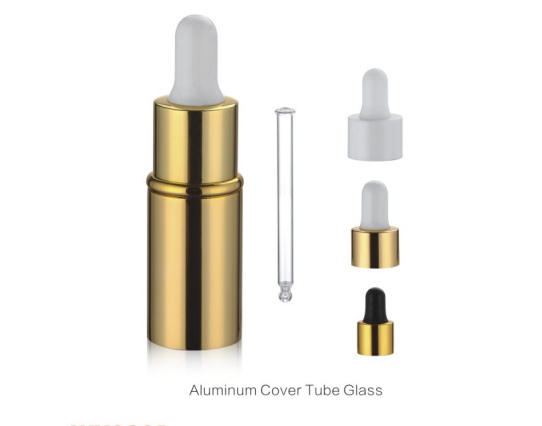
Manufacturers use a few main dropper bottle sizes. These sizes help companies sell different products. Some bottles hold 3 ml, 5 ml, or 10 ml. Each size is used for a special reason.
Dropper Bottle Size (ml) | Approximate Volume (oz) | Typical Use Case | Approximate Drops per Bottle |
|---|---|---|---|
3 ml | ~0.1 oz | Small quantities, precision dispensing | 30-60 drops |
5 ml | ~0.17 oz | Slightly larger volumes | 50-100 drops |
10 ml | ~0.34 oz | Larger quantities or extended use | 100-200 drops |
15 ml | ~0.5 oz | Tinctures, essential oils | 300-450 drops |
30 ml | 1 oz | Versatile use in cosmetics and medicine | 600-750 drops |
60 ml | 2 oz | Bulk essential oils, lotions | 1200-1500 drops |
Many industries use these bottle sizes. Cosmetics brands pick 10 ml and 15 ml bottles for serums and oils. Medicine makers often use 30 ml or 60 ml bottles for liquid drugs. Picking the right bottle size helps people measure and use products easily.
Tip: Small dropper bottles like 5 ml and 15 ml are great for travel. These bottles also lower shipping costs and work well for subscriptions.
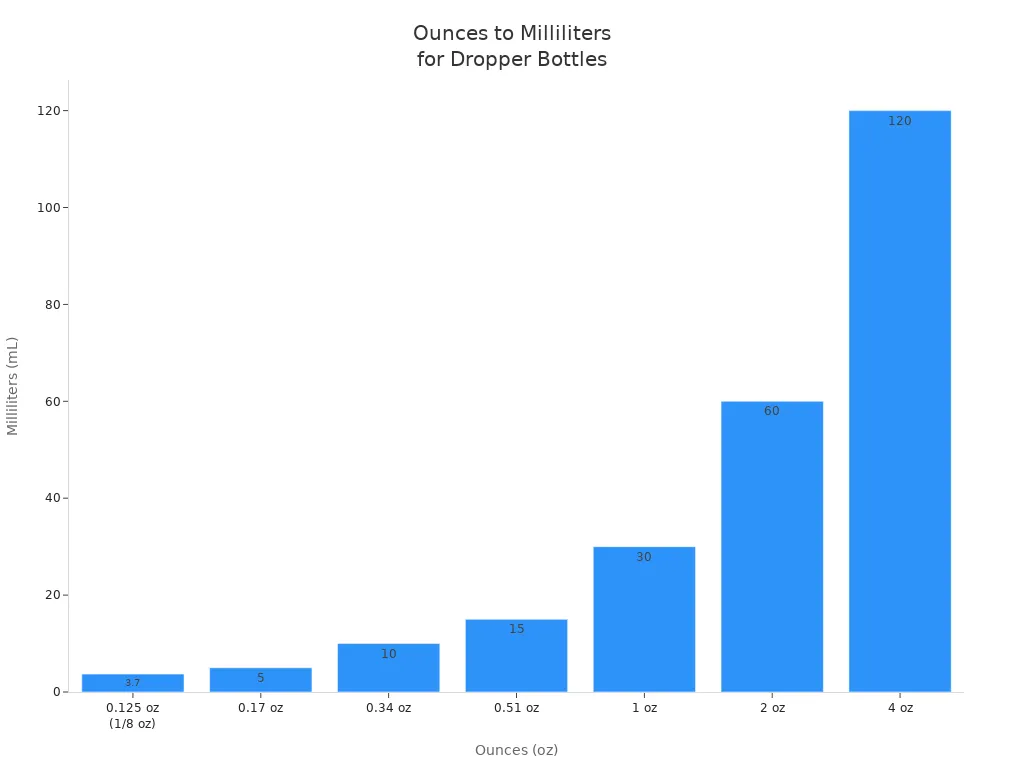
It is important to know how ounces and milliliters match up. Countries use different ways to measure, so a chart helps everyone. The chart below shows common conversions for dropper bottles. It also shows the dram unit, which is about 3.7 milliliters.
Unit | Milliliters (mL) | Drams | Ounces (oz) |
|---|---|---|---|
1 Dram | ~3.7 | 1 | 0.125 |
1 Ounce | 30 | 8 | 1 |
5 mL | 5 | ~1.35 | ~0.17 |
10 mL | 10 | ~2.7 | ~0.34 |
15 mL | 15 | ~4 | ~0.51 |
30 mL | 30 | 8 | 1 |
60 mL | 60 | 16 | 2 |
120 mL | 120 | 32 | 4 |
Dropper bottles are close in size to small perfume bottles. For example, 5 ml to 15 ml bottles are good for samples and travel kits. These bottles are easy to carry and allowed on planes. Most perfume bottles start at 30 ml and go up to 100 ml or more. The table below compares dropper bottles and perfume bottles:
Size Category | Volume Range (mL) | Volume Range (fl. oz.) | Typical Use Cases |
|---|---|---|---|
Samples and Miniatures | 1 - 10 | 0.03 - 0.34 | Testing new fragrances, samples |
Travel Sizes | 10 - 30 | 0.34 - 1.01 | Travel-friendly, TSA-compliant |
Standard Full Sizes | 30 - 100 | 1.01 - 3.38 | Regular consumer use |
Large or Collector | 100 - 250+ | 3.38 - 8.45+ | Collectors, cost-effective bulk |
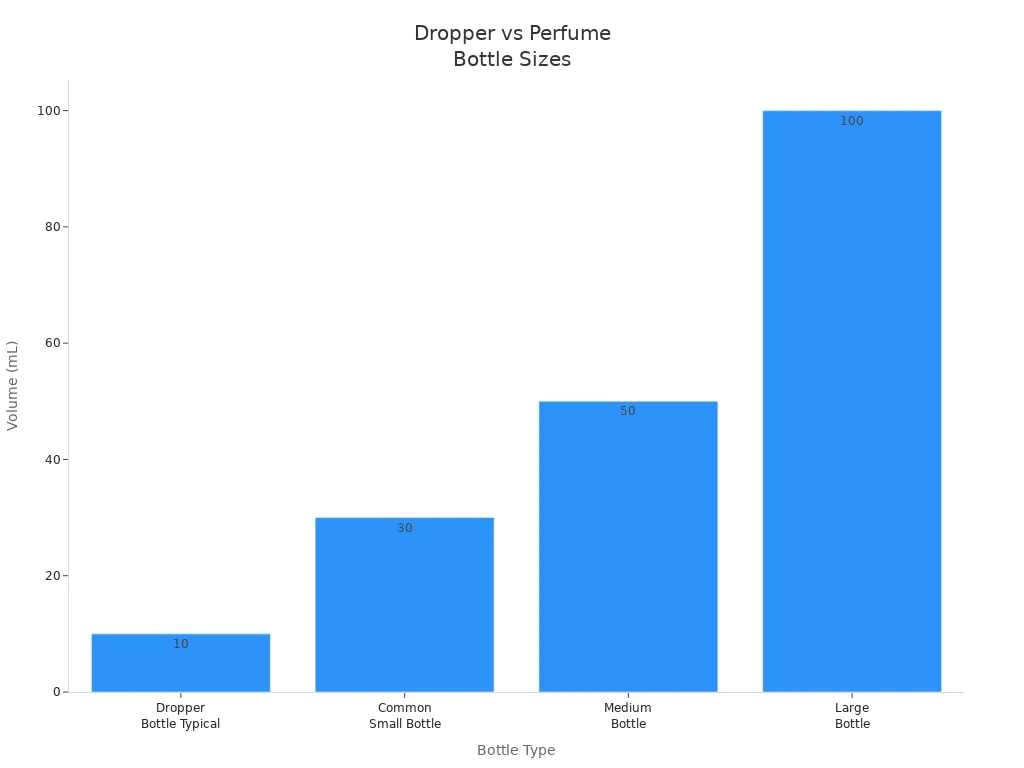
Perfume bottles and dropper bottles are alike in small sizes. Brands use 15 ml dropper bottles for samples and oils. This helps people carry products and use the right amount. The standard conversion of 1 ounce to 30 milliliters keeps things the same in many countries.
Picking the right bottle size means knowing how people use the product. Each product, like essential oils or tinctures, needs a certain bottle type and size. Thick liquids need droppers with bigger openings. The dropper and bottle must fit well to stop leaks and keep things safe.
The kind of product and how thick it is help pick the best bottle.
How you use the product, like with a dropper or pipette, changes the size you need.
Products that are hurt by light often use amber glass bottles.
The shape of the dropper tip helps with careful use.
Who will use the product and how also help pick the right bottle size. For example, a 4 oz bottle is good for things people use every day and helps customers trust the brand. Smaller bottles, like 0.5 oz, are better for strong products that need careful measuring. Brands can pick special bottle sizes and order small amounts, which helps new companies try out ideas without spending too much.
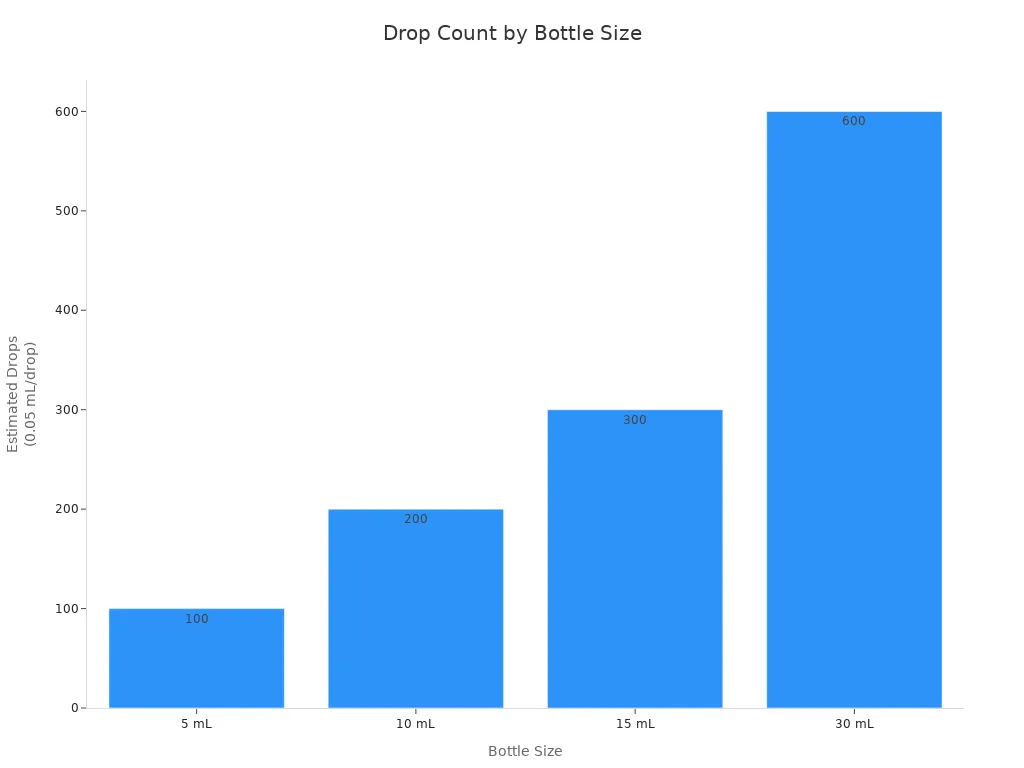
How many drops are in each bottle matters for measuring the right amount. A 30 ml bottle usually gives about 600 drops, but this can change if the oil is thick or the dropper is different. Thicker oils make bigger drops, so you get fewer drops. Using the right bottle size helps people measure better and waste less.
Tip: Brands can pick special bottle sizes and order amounts that fit their needs and goals.
Label and packaging design matter for how a product looks and works. The bottle’s shape and size decide how big the label should be. For a 30 ml bottle, labels are usually 4-5 cm tall and 8-9 cm wide. Round bottles need smaller labels to wrap neatly. Flat bottles can use bigger labels for more pictures or words.
Packaging design can have things like neck support and windows to show off the product.
Special design choices help brands look different on store shelves.
Labels can be made from paper, plastic, or metal, and each has its own good points.
Working with skilled companies like DM Packaging gives brands lots of help. They do everything, like making molds, printing, coating, and putting things together. They work fast, usually finishing in 30-35 days from start to finish. They check quality with ISO9001 and ISO14001 certifications, so packaging is safe and strong. Mold fees start at $3,000 and can be given back after big orders, so brands can save money. Discounts for big orders also help brands spend less.
Note: Picking the right bottle size and working with good suppliers makes packaging better, helps the brand look good, and lets brands do small or big projects easily.
Perfume bottles come in many sizes, from tiny samples to big collector bottles. Some perfume bottles are as small as 1 ml for samples. Others can be as large as 250 ml for collectors. A size chart helps people see all the choices. Most perfume bottles are made of glass. Some use metal, crystal, wood, or plastic. Glass keeps the scent safe and stops it from changing. Tight seals and pump tops keep the perfume from escaping. Perfume bottles are made to look nice and keep the scent fresh.
Dropper bottles are different in how they look and work. They are usually smaller, like 5 ml, 10 ml, or 30 ml. These bottles use glass so oils and serums do not react with the bottle. Dropper bottles help people use the right amount. They also keep air out of the product. This packaging lets people use cosmetics and oils carefully. Brands pick dropper bottles for products that need careful measuring and to stay fresh.
Bottle Type | Typical Sizes (ml) | Materials Used | Primary Focus |
|---|---|---|---|
Perfume Bottles | 1-250 | Glass, metal, crystal | Aesthetics, scent stability |
Dropper Bottles | 3-60 | Glass, plastic | Dosing, chemical compatibility |
Small perfume bottles let people try new scents. Dropper bottles also come in small sizes for testing oils or serums.
Perfume bottles and dropper bottles are used for different things. Perfume bottles hold scents and are made to look nice and keep the smell safe. Brands use different sizes to fit what people want. Knowing about perfume bottle sizes helps people pick the right one for daily use or collecting.
Dropper bottles are best for cosmetics, essential oils, and medicine. They help people use the right amount and keep the product clean. It is important that the packaging matches the product in both cases. In medicine, companies check the packaging to make sure it is safe and does not react with the product. Cosmetics brands use glass for pure oils so the oils do not react with plastic. Health and safety rules help brands pick the right packaging to keep products safe.
Both perfume and dropper bottles come in small sizes for samples and travel. These small bottles help people try products and use just a little at a time. The size chart and knowing about bottle sizes help brands make packaging that people like.
Measurement standards for dropper bottles help keep products safe. They also make brands look the same everywhere and help with selling in other countries. Manufacturers and brands use clear ways to change ounces to milliliters. This helps stop mistakes with how much people use and follows the rules.
Packaging has special features like child-resistant caps and glass that blocks UV light. These features keep the product safe and follow safety rules from around the world.
Picking the right bottle size and knowing how many drops are in each bottle helps people use the product better and makes the product higher quality.
Brands that use global standards can sell in new places, earn trust, and give safe, good products to people all over the world.
Most brands use 15 ml or 30 ml bottles. These sizes make it easy to count drops. A 15 ml bottle has about 300 drops. A 30 ml bottle has about 600 drops.
Manufacturers use both units for people in many countries. This helps with selling products everywhere and stops confusion. It is like how capsule and pill bottle charts show both units.
Good packaging keeps products safe from air and light. It also stops contamination and helps measure the right amount. Things like child-resistant caps and UV glass protect users.
Yes, dropper bottles work for liquid medicine and supplements. They help people measure the right dose. Many companies use them for vitamins and herbal extracts.
Brands should think about what the product is and how often people use it. They should also look at who will buy it. Checking capsule and pill bottle charts helps pick the best size.

