
Views: 0 Author: Site Editor Publish Time: 2025-08-26 Origin: Site


Amber and violet glass bottles keep essential oils safe. They block bad UV light and slow down damage.
Light can make essential oils lose their smell and color fast. It also makes them lose their good effects. Do not use clear glass bottles for storing oils for a long time.
Always close essential oil bottles tightly. This stops air from ruining the oils.
Keep your oils in cool, dark places. Do not put them in sunlight or under bright lights. This helps them stay fresh longer.
Picking the right bottle color and storage way is important. It helps your essential oils stay safe and work well for a long time.
Sunlight can change your essential oils a lot. If you use the wrong bottle color, light can damage your oils fast. Sunlight, especially ultraviolet rays, breaks down some parts of the oil. This can change how your oils smell, look, and work. Some oils get weaker in just a few days if you keep them in clear bottles or near sunlight.
Tip: Keep your essential oils away from windows and bright lights. Even lights inside your house can hurt them over time.
The color of the bottle helps protect your oils by blocking light. Amber glass bottles block most UV and blue light. This slows down damage to photo-sensitive oils. Violet glass bottles block almost all visible light. They let in a little UV-A light, which can help keep oils fresh and fight bacteria.
Here is a table that shows how different kinds of light affect essential oils from different plants:
Radiation Type | Plant Species | Essential Oil Component(s) Affected | Effect on Component(s) | Additional Notes |
|---|---|---|---|---|
UV-B | Pelargonium graveolens | Geraniol | Significant increase in percentage | Alters citronellol/geraniol ratio, important for oil quality |
UV-B | Pelargonium graveolens | Citronellol, β-elemene | Reduction | Under UV-B exposure |
UV-B | Lemongrass | Z-citral, geraniol formate, linalyl formate | Significant increase | UV-B increases overall essential oil content |
UV-B | Eclipta alba | α-terpineol, δ-cadinene, methyl linoleate | Significant increase under continuous UV-B irradiation | Essential oil content increased under continuous UV-B, reduced under intermittent UV-B |
UV-B | Ocimum sanctum | Essential oil secretion | Increased due to development of oil glands | UV-B exposure promotes oil gland development |
UV-B | Rosmarinus officinalis | Camphene, α-pinene, myrcene, 1,8-cineole, β-pinene, α-terpinene, β-caryophyllene, α-phellandrene | Increased percentages | Exposure to 50% sunlight |
UV-B | Rosmarinus officinalis | Camphor, 3-carene, terpinen-4-ol, borneol, verbenone, α-terpineol, humulene | Decreased percentages | Exposure to 50% sunlight |
UV-A (low PAR) | Pelargonium graveolens | Citronellol | Increased | Positive effect on citronellol content under low photosynthetically active radiation (PAR) |
UV-A | Mentha piperita | Menthol | Decreased by 65% | UV-A during night reduces menthol biosynthesis |
UV-A | Mentha piperita | Menthofuran | Increased 2.3 fold | UV-A during night increases menthofuran content |
UV-A (day) | Mentha piperita | Total essential oil content, menthol, menthofuran | Increased | UV-A during day increases these components |
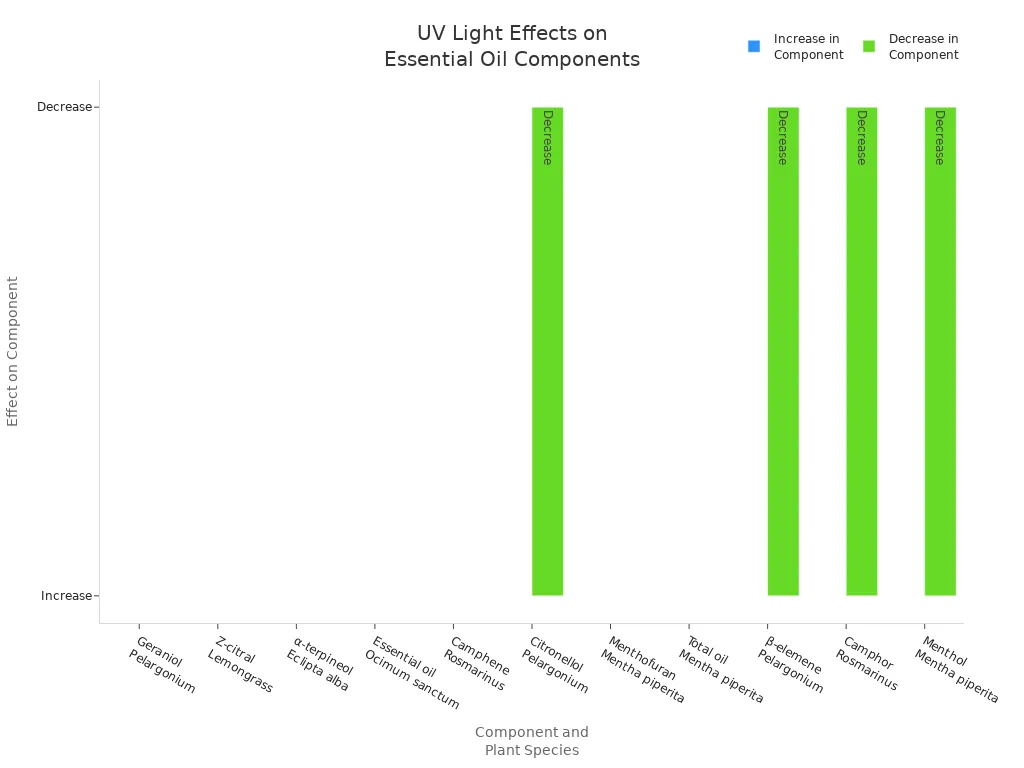
You can see that light changes the chemicals in essential oils. This is why bottle color is important for keeping your oils safe and lasting longer.
When light hits your essential oils, it does more than change the smell. It also starts something called oxidation. Oxidation and essential oil shelf life are closely linked. Oxygen and light together make the oil break down faster. This means you lose scent, color, and health benefits. Some oils can even become unsafe if oxidation goes too far.
The right bottle color keeps your oils safe from light and oxygen. Amber glass blocks about 97% of UV rays. Violet glass blocks almost all visible light and most UV rays. These colors help slow down photo-oxidation, which is the main reason oils go bad. Cobalt blue and green glass give some protection, but not as much as amber or violet. Clear glass does not protect at all, so do not use it for long-term storage.
Here is a table that shows how different bottle colors protect your oils from oxidation and help them last longer:
Bottle Color | UV Protection Level | Impact on Oxidation and Shelf Life |
|---|---|---|
Amber (Brown) | Blocks ~97% of UVB and UVA | Industry standard; significantly slows photo-oxidation; best for all essential oils, especially light-sensitive ones. |
Cobalt Blue | Blocks ~50% of UV rays | Moderate protection; suitable for short-term or dark storage; less effective than amber for prolonged exposure. |
Green | Blocks ~30–50% of UV rays | Moderate protection; not ideal for long-term storage without extra measures. |
Clear | No UV protection | Allows full light penetration; causes rapid degradation and oxidation; only for immediate use or display. |
UV-Protective Miron (Violet) Glass | Blocks almost all visible light except violet and infrared | Highest protection; preserves molecular integrity; ideal for sensitive, high-value oils and long-term storage. |
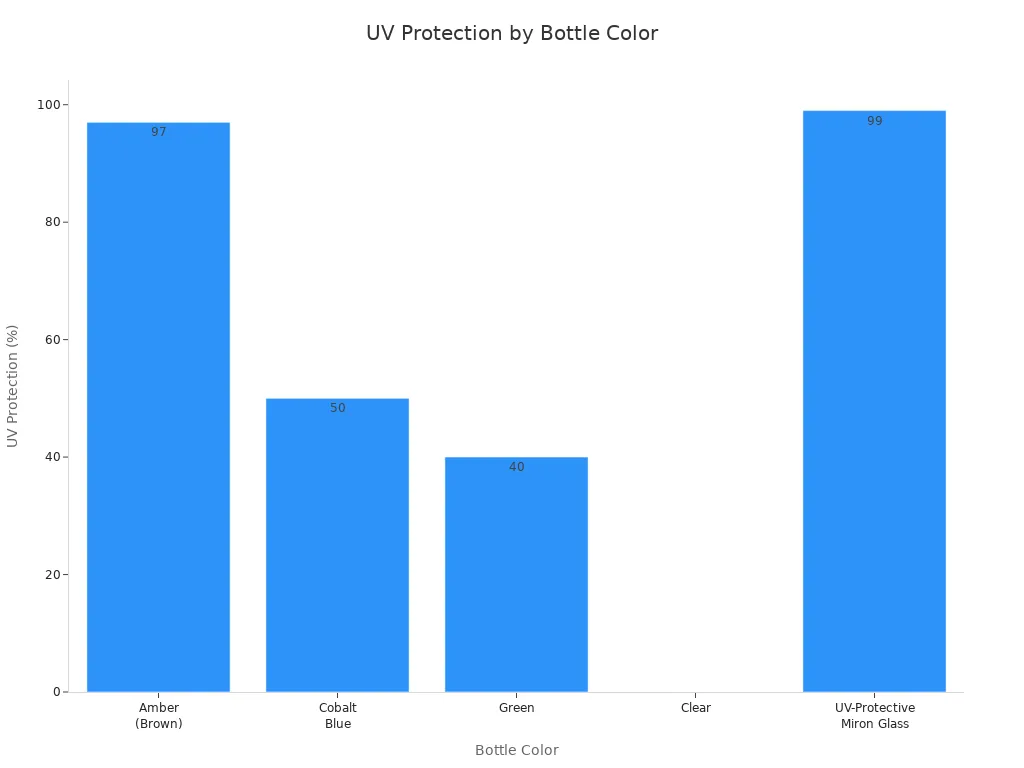
You want your essential oils to last a long time. Picking the right bottle color protects the light-sensitive parts inside. This keeps your oils fresh, safe, and working well for longer. Remember, sunlight and indoor light both cause damage. Always choose a bottle color that blocks as much light as possible to keep your oils safe.
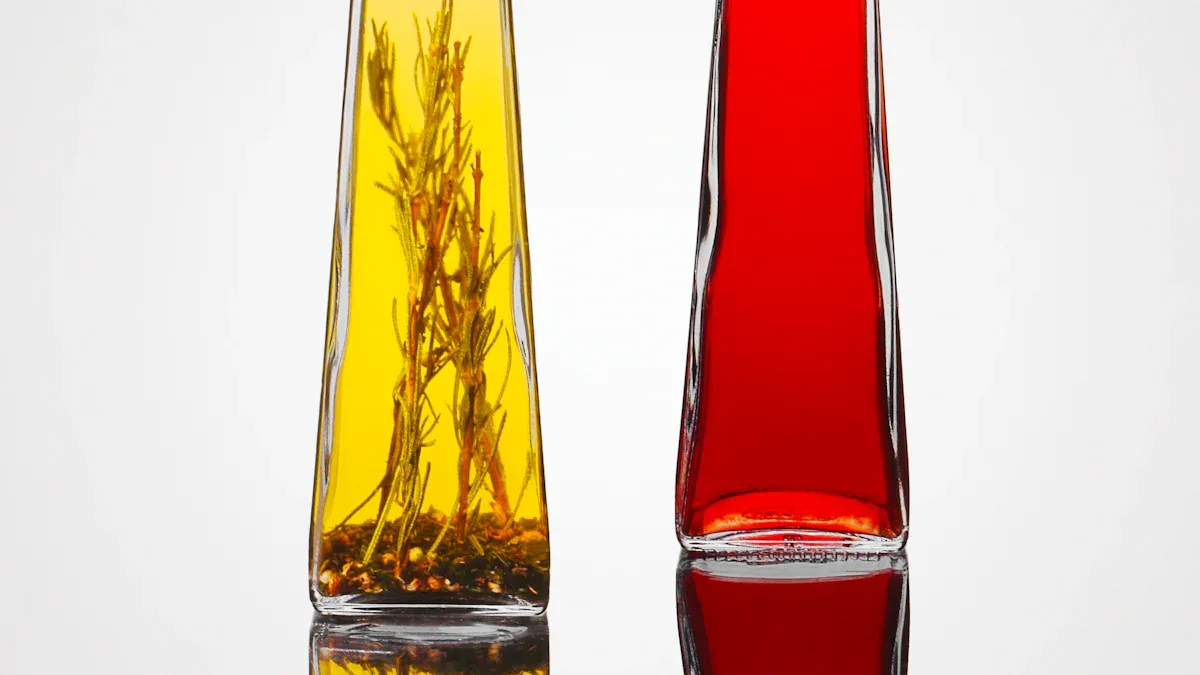
Amber bottles give you the best protection for essential oils. This bottle color blocks almost all UV-A and UV-B rays, which helps extend the shelf life of your oils. Amber glass filters out most light wavelengths below 450 nm, so your oils stay fresh and keep their therapeutic efficacy. You will notice that essential oils stored in amber bottles keep their scent and color longer than those in clear glass. Many companies choose amber bottles because they offer maximum protection and help maintain the quality of light-sensitive oils.
Miron glass, also called violet glass, stands out for its unique ability to block the entire visible spectrum except violet. This special color lets in some UV-A and infrared light, which can help preserve the freshness and aroma of essential oils. Studies show that oils stored in miron glass keep their original color, smell, and texture for up to 24 months. The dropper and oil inside remain in great condition, even after long storage. Violet glass has a long history, dating back to Ancient Egypt, and modern tests confirm its superior shelf life benefits. If you want the highest level of protection, miron glass is an excellent choice.
Cobalt blue bottles look attractive and provide moderate UV protection. They block more light than clear glass but less than amber or miron glass. Essential oils stored in cobalt blue bottles may last longer than in clear or green bottles, but you might notice changes in color and scent over time. After 24 months, oils in cobalt blue bottles can become thick and develop a rancid smell. The dropper may also get damaged. While cobalt blue bottles are popular for their appearance, they do not offer the same shelf life benefits as amber or miron glass.
Green bottles offer moderate protection for essential oils. This color absorbs some UV and visible light, but not as much as amber or cobalt blue bottles. Green bottles are common for wine and olive oil, but they are less effective for preserving essential oils. Oils stored in green bottles may still degrade over time, losing their scent and therapeutic efficacy. If you use green glass, you should store your oils in a dark place to help extend their shelf life. Green bottles look nice, but they do not block enough light to keep essential oils at their best.
Clear glass bottles let in almost all light, including UV rays. This means essential oils stored in clear glass lose their quality quickly. The shelf life drops, and the oils can lose their scent, color, and potency. You should only use clear glass if you plan to use the oils right away or want to display them for a short time. For long-term storage, clear glass is not a good choice.
DEMEI is a leading professional glass bottle manufacturer. They offer a wide range of high-quality glass bottles, including amber, miron, cobalt blue, and green bottles. Their strict quality management ensures your essential oils get the best protection and storage.
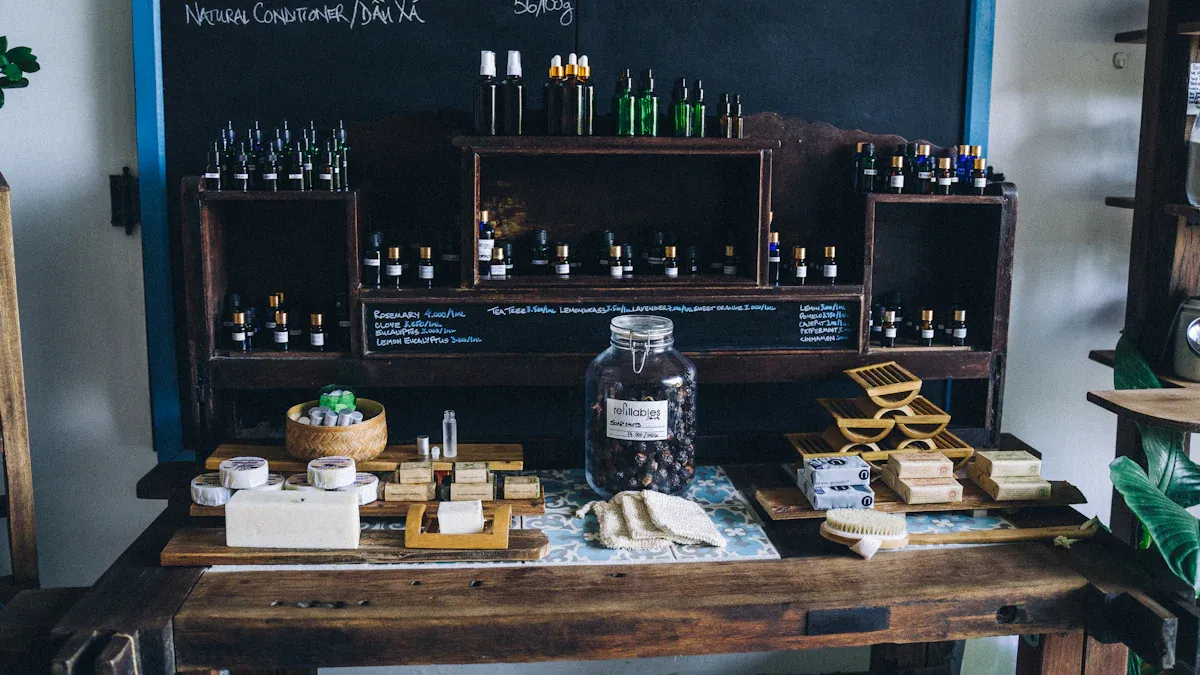
When you store essential oils, always pick bottles that block light. Amber glass is the best way to store essential oils because it blocks almost all UV rays and keeps your oils safe. Violet glass also works very well, using special technology to protect the oils from harmful rays. Green glass can help, but it does not block as much light as amber or violet. Cobalt blue bottles look nice, but they let in more UV rays, so they are less effective for long-term storage. If you want the best way to store essential oils, choose amber or violet bottles every time.
Tip: Colored glass bottles like amber, violet, or green help store essential oils by blocking light and slowing down oxidation.
Clear glass bottles do not protect your oils. They let in all the light, which speeds up oxidation and makes your oils go bad faster. If you use clear glass, your oils can lose their scent, color, and benefits in a short time. You should avoid clear glass for long-term storage. Only use it if you plan to use the oils right away or for display.
Clear glass allows light to damage your oils.
Proper oil storage means using colored bottles to keep your oils fresh.
You need to keep your bottles tightly closed. Good caps stop air from getting in and oils from leaking out. If you do not close the bottle well, your oils can evaporate or spoil. Always check that the cap fits snugly and seals the bottle. Leak-proof caps with inner liners work best. This keeps oxygen out and helps store essential oils for longer.
To get the longest shelf life, store essential oils in a cool, dry place away from sunlight. Dark storage conditions slow down oxidation and keep your oils potent. Properly stored essential oils stay fresh, safe, and effective for much longer.
Picking the right bottle color is important for your essential oils. Dark bottles help keep your oils fresh for a longer time. They slow down oxidation and block harmful light. This helps your oils keep their scent and benefits.
Note: Colored glass bottles like amber and cobalt blue are best for making essential oils last longer. Clear glass bottles do not stop UV rays and should only be used for a short time.
Here is a table to show how well each bottle color works:
Glass Bottle Color | UV Protection Level | Suitability for Essential Oils | Shelf Life Impact |
|---|---|---|---|
Amber | 90-95% UV blocked | Best for most essential oils; excellent sealing | Extends shelf life up to 1 year by preserving chemical integrity |
Cobalt Blue | 85-90% UV blocked | Good for light-sensitive oils; attractive look | Good shelf life extension, slightly less than amber |
Green | 70-75% UV blocked | Suitable for less sensitive oils | Moderate shelf life extension |
Violet | 60-65% UV blocked | Chosen for spiritual or aesthetic reasons | Moderate protection, less than green |
Clear | 0% UV protection | Only for stable oils or short-term use | Fastest degradation, shortest shelf life |
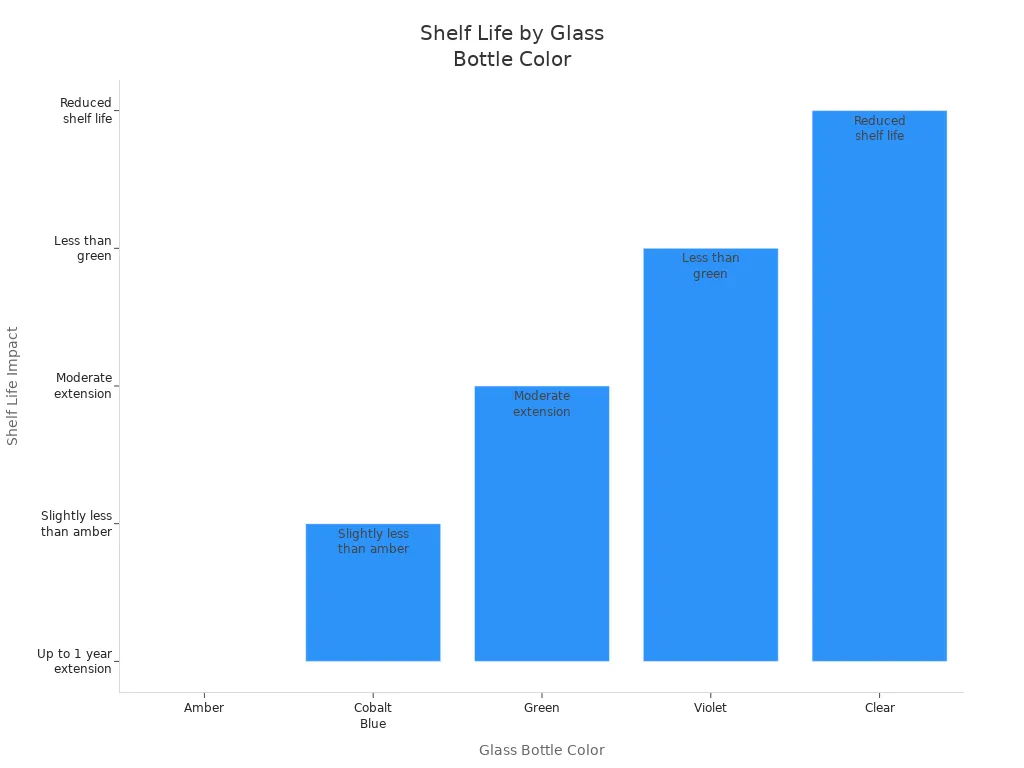
Amber glass is the best for storing oils for a long time.
Cobalt blue and green bottles give some protection but not as much.
Violet glass looks special but does not block as much UV.
Clear glass is only good if you use the oil soon.
To make your essential oils last, always use colored glass bottles. Keep them in a cool and dark place. This easy step helps your oils stay fresh and useful.
You can prolong shelf life by choosing amber or violet bottles when you store essential oils. These colors block harmful UV rays and slow down oxidation.
Always keep bottles tightly sealed.
Place oils in cool, dark spots away from sunlight.
Transfer oils to smaller containers if needed.
Proper storage helps you maintain the scent and benefits of your oils. Make smart choices so your essential oils stay fresh longer.
Amber and violet bottles give you the best protection. These colors block most harmful light. Your oils stay fresh and last longer when you use these bottles.
You can reuse bottles if you clean them well. Wash with warm soapy water. Rinse with alcohol. Dry completely before adding new oils. This helps prevent contamination.
Clear glass lets in all light. Your oils lose their scent and benefits faster. For long-term storage, always pick colored bottles.
Keep your bottles in a cool, dark place. Make sure the caps are tight. Avoid windows and heat. This helps your oils last longer.
Plastic bottles can react with oils. This may change the oil’s quality. Always use glass bottles for safe and long storage.
